Indian Incense - History, Types, Purposes
In Hindi, as well as other languages, incense has been known as "Agarbatti" since time immemorial, and was used primarily for medicinal purposes and in religious rituals of worship. The history of Indian incense is very ancient, perhaps the oldest, and the first mention of Indian incense can be seen in Vedic literature dating back to 5000 BC. It is in these texts that we see a description of the value and meaning of incense. Indian languages, culture as well as Indian incense are known for a rich tradition and it was Indian incense sticks that first gained their recognition and value in ancient times.
Indian incense is first mentioned in the ancient texts - the Vedas, namely the Rig Veda and Atharva Veda, which shed light on the history of Indian incense. Burning incense - the first mentioned way of using incense , was intended for medical (healing) purposes and aromatization of space. The first destination is associated with Ayurveda and the use of Indian incense as medicines, whose healing properties contributed to a speedy recovery. In fact, it was the Ayurvedic healing system that introduced the basis for making incense, which is still used today. It was the monks and healers of the past era who contributed both to the creation of a method and system for the production of Indian incense, and to its distribution, thanks to which it became possible to buy Indian incense throughout the country .
Ayurvedic principles were at the heart of determining the ingredients for making incense. According to these principles, the ingredients were divided into 5 categories: fruits, roots, stems and branches, flowers, leaves. Widely used:
like other ingredients used in Ayurveda.
Further, incense in India spread from the sphere of healing to other spheres, and the purposes of using Indian incense expanded . Indian incense could be bought for religious Hindu rituals, as well as for scenting rooms. With the understanding of the meaning of burning incense and with the increasing spread of this tradition, later, the offering of incense became also an integral part of Buddhism, whose roots are in India. In the world history of incense, it is Indian incense that occupies the main place, and it was they who were brought to China by Buddhist monks around 200 BC.
Indian incense could be bought in 2 types - masala incense ("a mixture of spices") and charcoal - these two types are now the most common types, and it is these Indian incense sticks that you can buy in any country in the world.
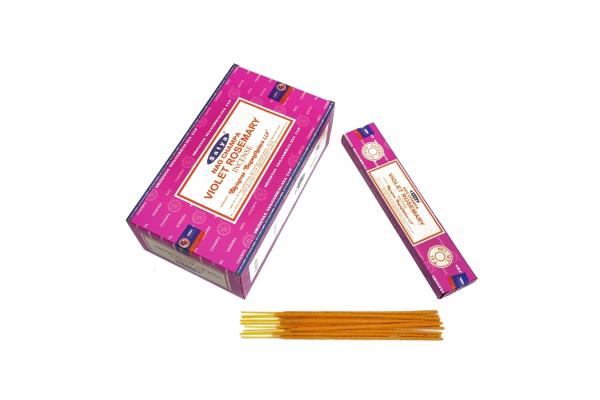
Masala incense (or masala incense) is made by mixing fragrant solid ingredients and transforming them into a paste , which is then applied to a bamboo stick base. Such a subspecies of masal incense as Champa has become widespread. Champa incense belongs to the family of Indian scents reminiscent of the Champa flower, also known as Plumeria. Most Champa incense uses plumeria, as it has a rich, sweet aroma. Traditionally, the Champa species also consists of the resin of the Ailant tree (tree of paradise) as well as Sandalwood and a spice mix. Therefore, Champa incense is associated with floral and earthy scents, with light notes of sandalwood .
Another type of masala incense is Dhoop, which does not belong to the type of Indian incense sticks. It is a soft, plasticine-like incense without any base or stick. This type of incense has a very concentrated smell and produces a lot of smoke as a result of burning, so it is best suited for open spaces.
When Indian incense sticks, still unscented, are dipped in a mixture of oils or essences, then we get charcoal incense. As a rule, in the manufacture of charcoal incense, not natural materials are used, but their chemical substitutes, which is why you cannot buy cheap and non-natural Indian charcoal incense sticks in our store, as we make sure that you can always buy incense from India high-quality and natural .
Indian incense is an essential attribute of Hinduism and has been used in religious rituals for many centuries. Along with the development of Hinduism all over the world, Indian sticks also became widespread, and today it has become easy to buy incense from India. Our store has a wide selection of Indian incense such as masala, champa , as well as dhups and cones.