


Contacts
Delivery


The art of fragrances
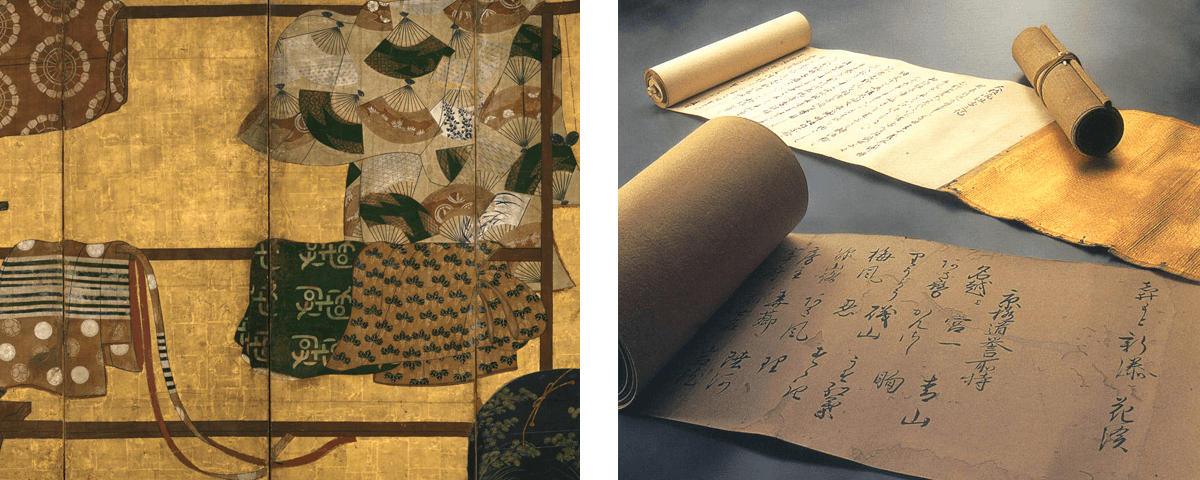
It is difficult to imagine our modern life without fragrances. We live in an age of fragrances. We surround ourselves with aromas. In fact, the use of fragrance is considered one of the main forms of self-expression. Aroma for us is both an opportunity to express oneself and a way to communicate with other people. As well as perfumes, fragrances today capture people's hearts and play an increasingly important role in relaxation, healing, filling our time and space with special properties, providing a sense of satisfaction with life. Nowadays, incense is considered sacred and sometimes is used as an offering to God, and in other cases it can be used as a tool to bring peace into one's life. However, fragrances were part of everyday life long before our society today with its high levels of stress. Long ago using incense helped people to calm down, gather and look inside. As humanity has a history and a culture, so fragrance naturally has its own history and culture. How and when does the familiar culture of incense grow together?
• "As humanity has its own history and culture, so does fragrance have its own"© Nippon Kodo
Let's try to look into its depths. We are talking about "Koh" - a systematic Japanese art of fragrance, which has no analogues around the world. The word "perfume" comes from the Old French "perfumar" (where "per" means through, and "fumar" - smoking), which suggests that the art of perfumery probably began with the burning of incense. The history of Koh art probably dates back to the time when the Buddhist monk Ganjin came to Japan from China in 754 AD, during the Chinese Tang Dynasty. This venerable monk, well known for the introduction of Buddhist precepts in Japan, played a significant role in the history of incense. Ganjing introduced a thriving incense culture of the Chinese Tang dynasty in Japan, due to medicinal incense as well as mixed aromatic beads (Neriko). Neriko was made from a fragrance powder for medical use mixed with binders such as nectar and molasses. In Japan, before that there was no fragrant incense of such a type, people usually burned only medical incense to create aromas. Because Neriko was a mixture of ingredients, different mixtures created different flavors. As a result, people began to create their favorite flavors from the original ingredients. Incense was no longer used only as a religious offering. They have become a pleasure of taste, designed to enjoy the delicate aromas. This is what gave rise to the aesthetic, sophisticated art of fragrant takimono in Japan.
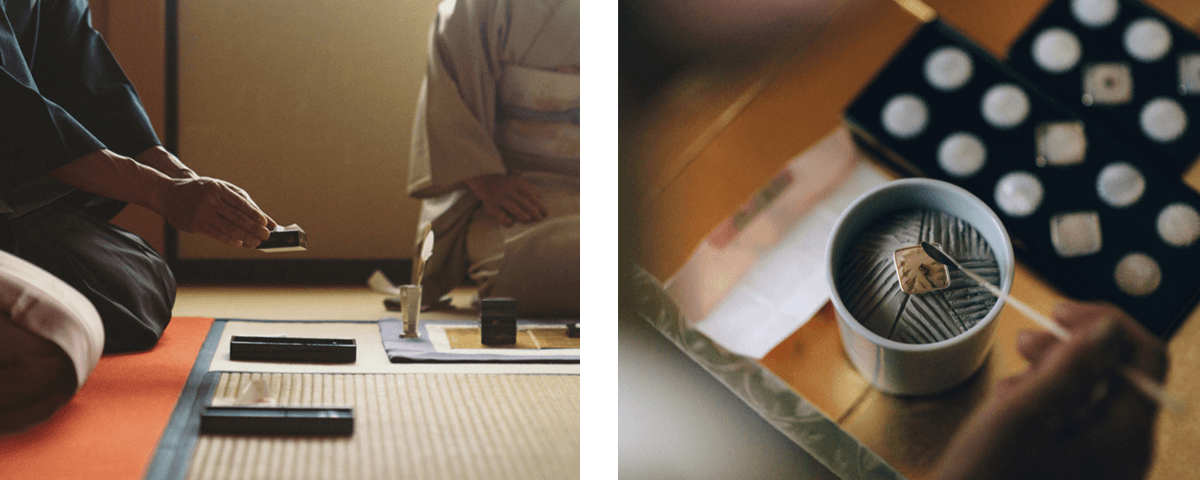
• “Listening to the scent” of fragrances in peace of mind © Nippon Kodo
During the Heian period (VIII-XII centuries), courtiers came up with the original takimono in search of exquisite fragrances for personal use. On occasion, mood, seasons, different mixtures were used. “Takimo no awasho”, a fragrance game that competed to create the best fragrances, also began during this period. Not been satisfied with the simple aromas of flowers and fruits in nature, the courtiers created new aromas, thus providing the basis for a special culture of fragrances, which was firmly tied to the awareness of the seasons. That is how Koh was formed. In the art of fragrance "Koh", finally was formed in the era of Muromachi in Japan (1338-1573), the differences of aromas were described as "listening to the aroma", listening to the whisper of incense in peace of mind. The commitment to creating beautiful fragrances is a long and respected tradition that can be traced back to Djumon Takai, better known as Koji, a skilled art specialist and a major supplier of precious, rare and exquisite fragrances to the Emperor of Japan and his court.
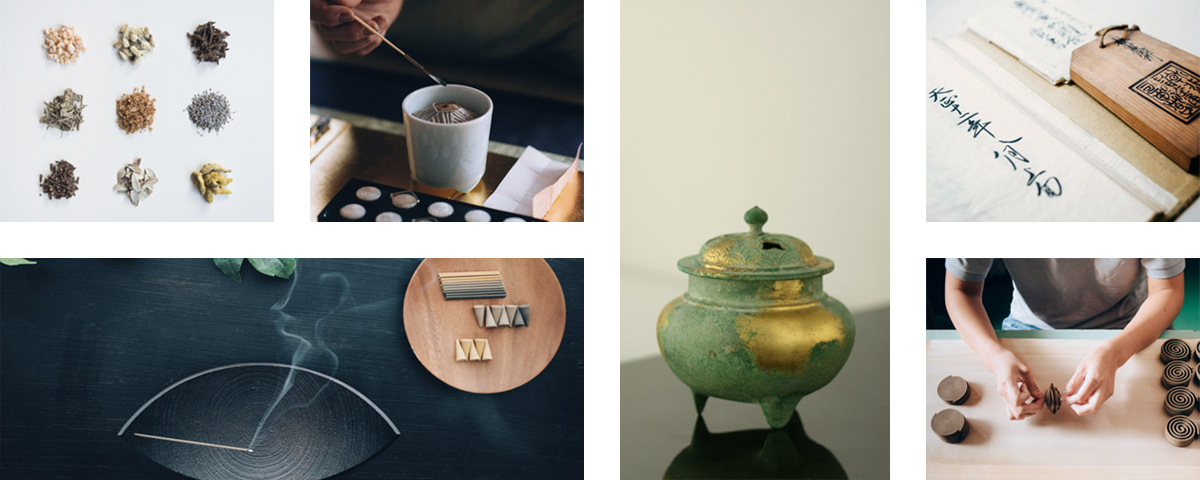
• “The noble art of fragrance as part of a sophisticated lifestyle” © Nippon Kodo
One of the successors of the fragrance culture is Nippon Kodo, that continuing development of the world of fragrances, adding the latest technology to traditional skills. Many of the wonderful flavors which continue to be produced till today are based on original recipes created by Koji. So "Koh" still represents the noble art of fragrance, as part of a refined way of life and culture, deeply connected with the Japanese way of feeling, as well as with Japanese literature and poetry. Nippon Kodo continues to make fragrances, mostly manually, as has been done for hundreds of years. High-quality natural raw materials are used as ingredients in the manufacture of fragrances. In the process of production, natural resins of valuable tree species and floral ingredients are loaded into vats, which are mixed with other organic raw materials. After that, the mass is loaded into machines that squeeze long strings of incense, or turn it into cones and spirals. Then the sticks, cones and spirals are cut identically and carefully placed in wooden molds, where they are left to dry. The molds are placed in a room where humidity and temperature are controlled so that provides only the required amount of air and light. The fragrances are left for a few days until they have hardened. Then they are collected and packaged. Nippon Kodo products have unique flavors. These fragrances are created by combining carefully preserved recipes with the sensitivity of modern Japanese perfumers with the best noses and instincts that interpret and develop the tradition of creating exquisite fragrances.
• "Carefully guarded recipes and sensitivity of modern Japanese perfumers" © Nippon Kodo
It takes a long time to become a skilled incense master. Such a person should feel every slight difference in weather, air, as well as in natural aromatic materials. And in addition, have sensitive hands that can make tiny adjustments to the amount of moisture used in kneading. It is said that a true master of incense should have sharp feelings and gentle hands. Inheriting the traditions of incense which had been cultivated since the 16th century, the Japanese had kept the culture of fragrance. Attention is focused not only on special areas such as Buddhist ritual services and incense ceremonies. But it also applies to recreation and health, which use the functional aspects of fragrances. The main purpose of the noble art of incense nowadays - to give people true peace of mind through aroma. MARIA NESTERENKO